Refreshing Portfolio Slicer Excel 2013+ data
Overview
This page describes the Excel 2013-style refresh workflow that also applies to later Excel versions with similar connection and Power Pivot behavior.
Before refreshing, make sure:
- the required external data files exist in the folder Excel is configured to use
- you have already run the external scripts when your workflow depends on them
- your source Excel tables do not contain bad data or empty rows
Main Refresh Options
In Excel 2013+, you will usually use one of these approaches:
- full refresh
- selective refresh
Full Refresh
A full refresh updates the Portfolio Slicer data used by the workbook in one pass.
This is the most common option, especially when multiple source areas may have changed.
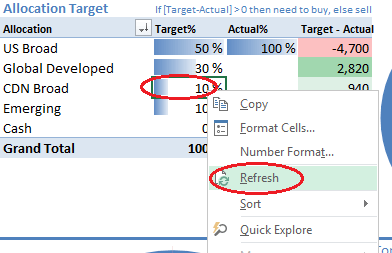
A typical way to trigger it is to select a cell in a PivotTable, right-click, and choose Refresh.
Selective Refresh
Selective refresh is useful when you changed only one specific table and do not want to refresh everything.
This is often most useful when you are entering or correcting transactions.
A typical workflow is:
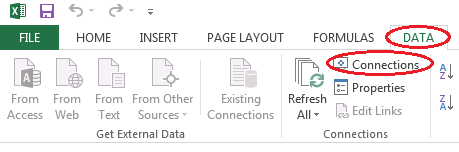
- go to
Data - open
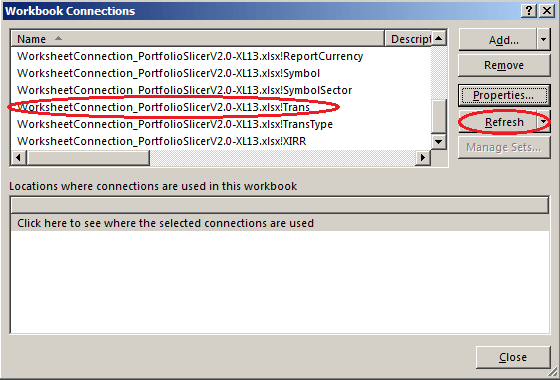
Connections - select the connection you want to refresh
- refresh that specific table or source
Faster Refresh Setup
After the initial setup phase, many users mainly refresh for one of two reasons:
- to update quotes and exchange rates
- to reflect changes in transaction data
Because of that, some users choose to configure Refresh All so it updates only the external data connections they use most often, and then refresh workbook tables selectively when needed.
This can significantly reduce total refresh time in larger workbooks.
Practical Advice
- use full refresh during setup or when multiple things changed
- use selective refresh when testing smaller edits
- validate data quality before refreshing
- start with the Holdings report after refresh if you want a quick sanity check